Tetouan: The UNESCO Medina Most Visitors Skip
Tetouan's medina is a UNESCO World Heritage site and arguably Morocco's most intact historic old town. Rebuilt by Andalusian refugees in the 15th century, it features whitewashed Hispano-Moorish architecture, seven historic gates (such as Bab el-Okla and Bab Jiaf), and thriving craft quarters without tourist congestion. It is best explored on foot with a local guide to understand its artisan heritage, the Mellah Jewish quarter, and the historic Royal Palace square.
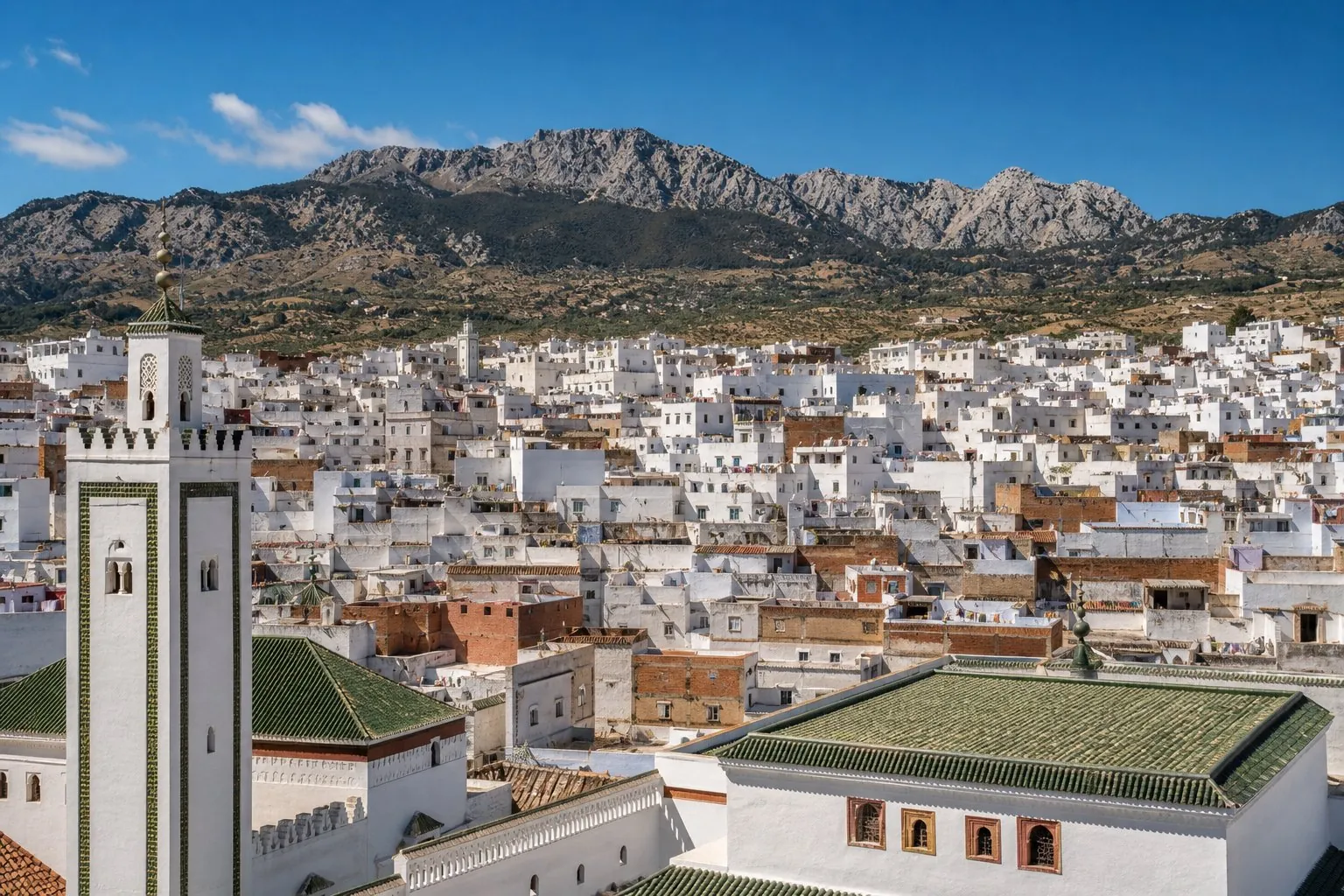
While travellers flock by the thousands to Fez and Marrakech, Tetouan sits quietly at the foot of the Rif mountains, less than an hour from Tangier. Its medina is not a tourist theme park; it is a living, working Moroccan-Andalusian city where carpenters, leather tanners, and zellige tile masters still practice their craft in the same stone ateliers their families have held for centuries.
The Andalusian heritage
Tetouan served as the primary point of contact between Morocco and Andalusia for centuries. After the fall of Granada in 1492, Andalusian Muslims and Sephardic Jews rebuilt the city, bringing intricate tilework, carved stucco, wrought-iron balconies, and an urban layout deeply influenced by southern Spain. In 1997, UNESCO designated the entire medina as a World Heritage site, citing its exceptional degree of conservation.
Seven gates and distinct quarters
The medina is enclosed within five kilometres of historic defensive walls pierced by seven ancient gates. Entering through Bab el-Okla on the eastern flank brings you directly into the artisan district, where you can watch weavers working wooden looms and woodworkers carving cedar panels. Further inside, the Mellah (the historic Jewish quarter) features straight, orderly streets with distinctive wooden shutters that contrast sharply with the winding alleys of the Muslim quarters.
Place Hassan II and the Royal Palace
At the junction between the historic medina and the Spanish-built Ensanche district lies Place Hassan II (formerly Plaza de España). Framed by modernist colonial arches and the crenellated walls of the Royal Palace, this expansive square is the social crossroads of Tetouan, where locals gather for evening promenades as the Rif mountain backdrop turns indigo.
Practical tips for visiting
Unlike Chefchaouen's tourist-friendly signage, Tetouan's medina is a genuine labyrinth without English placemarks. Hiring a licensed local guide at Bab el-Okla or arranging an escorted walking tour ensures you discover hidden riad courtyards, the 19th-century medersas, and traditional tannery vats without getting disoriented.
Visiting Tetouan with A&D Voyage
Our Rehla Al Shamal circuit and Chefchaouen & Tetouan Getaway tours dedicate unhurried half-days to Tetouan, paired with visits to the nearby Mediterranean coast at Martil and Cabo Negro.
Sources & References
Discover Northern Morocco